
The Community’s Choice to Look Away
Small Things Like TheseTown gossip, economic dependencies, and institutional influence gradually reveal how ordinary people help preserve the conditions that harm the convent’s girls.
increasing Bearing strength in each event
 decreasing
Bearing strength in each eventdecreasingRumors Without Consequences
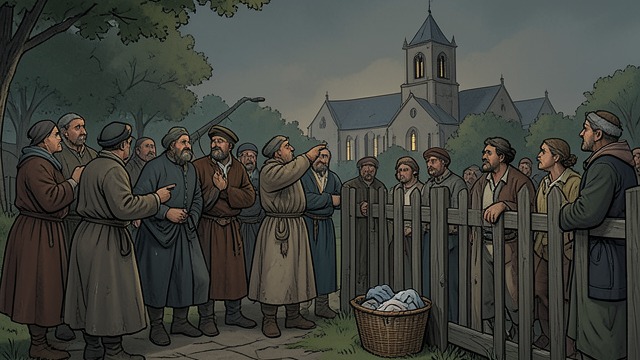
Rumors Without Consequences
Stories circulating
Residents tell different stories about the girls, the laundry, and the convent. Some reports describe exhausting work and confinement, while others defend the nuns or dismiss the talk as gossip.
Knowledge without action
The community’s uncertainty does not prevent people from benefiting from the laundry. Rumor becomes a way to acknowledge danger without accepting responsibility for investigating it.
A Customer’s Dependence

A Customer’s Dependence
Practical ties
The convent orders coal and logs, pays reliably, and provides valuable business when the economy is difficult. Bill Furlong has a livelihood and a family to protect.
The price of convenience
These ties make it easier to treat disturbing evidence as separate from ordinary commerce. Dependence does not excuse the harm, but it helps explain why silence can feel safer.
Eileen’s Warning

Eileen’s Warning
A household boundary
Eileen Furlong tells her husband that the convent’s troubles have nothing to do with their family. She argues that survival requires ignoring some matters and keeping on.
Fear beneath pragmatism
Her position is not simple indifference. She fears that challenging powerful institutions could endanger the future she has secured for their daughters.
A Warning from Mrs Kehoe

A Warning from Mrs Kehoe
The reach of influence
Mrs Kehoe warns Bill Furlong that the convent and the neighboring school have substantial influence. She stresses how little separates the institution from opportunities his daughters may need.
A choice framed as protection
The warning makes conformity appear prudent and dissent reckless. Bill Furlong understands the practical risk but no longer treats silence as morally neutral.
Witnesses on the Street

Witnesses on the Street
Recognition without intervention
As Bill Furlong walks with Sarah Redmond, neighbors recognize that she has come from the laundry. Some avoid them, and others make comments, but no one asks what she needs.
The public test
The town’s response shows that complicity is made from many small decisions. The people who see Sarah do not stop the rescue, yet their silence reveals how isolated she has been.
early December 1985
early December 1985 after the first delivery
the night after the first encounter
Christmas Eve after the final workday
Christmas Eve night
